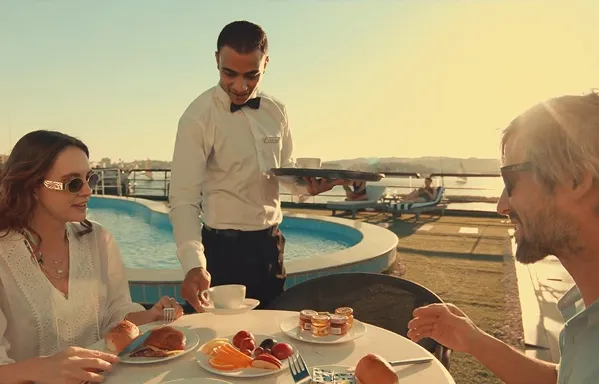
Digital Marketing


January 1, 2026
Estimated Read Time: 5–7 minutes
2025 was the year AI video went mainstream.
2026 will be the year marketers confront a new crossroads:
Will your brand scale authentic storytelling or synthetic shortcuts?
For the last two years, “AI video” has been treated like one big category.
But in reality, two very different paths have emerged:
Synthetic, machine-made footage that looks real but isn’t.

AI that amplifies your real footage, real people, and real brand moments.
The difference between those paths will define marketing in 2026.
Consumers have never been more saturated with video or more sensitive to what feels fake.
People can tell when something wasn’t real, wasn’t lived, or wasn’t captured in an actual moment. Even when generative video looks visually impressive, something in the human nervous system reads the disconnect.
It’s not just what audiences see.
It’s what they feel or don’t feel.
Even realistic AI-generated humans fail to deliver the micro-expressions, imperfections, and lived context that make real humans relatable.
When viewers sense something artificial, trust fractures.
They lean back instead of leaning in.
If you want to show someone skydiving with elephants, biking across a hot-air balloon, or juggling flaming tires on Mars, generative AI is unbeatable.
But when your content has a purpose to inspire, to teach, to sell, to reassure, to persuade,
It must feel human to resonate.
Authenticity is no longer a “nice to have.”
It’s the foundation of attention, trust, and conversion.

While generative AI manufactures synthetic moments, Authentic AI amplifies the real ones, the footage your brand already owns but rarely uses.
Most marketing teams aren’t fully on one side or the other yet, but in 2026, they’ll be pushed to decide how they want AI to shape their brand.
As teams experiment, learn, and adapt, the pattern is becoming clearer:
They’re beginning to choose:
This isn’t a completed transformation; it’s the early stage of a decisive move toward authenticity.
And 2026 is the year marketers will commit to which side they’re on.
It’s speed AND soul.
Scale AND brand safety.
AI AND humanity.
For years, marketers could experiment with AI without committing.
But 2026 will force a decision.
Here’s why:
Trust is becoming the most valuable currency in marketing.
Synthetic likenesses, AI actors, and fake product visuals carry growing risk.
Engagement drops the moment something feels “generated.”
The demand for video now exceeds what manual editing can deliver.
Morale, identity, and craft matter now more than ever.
Marketers won’t be able to straddle the fence.
The choice you make will shape your brand’s identity and credibility for years to come.
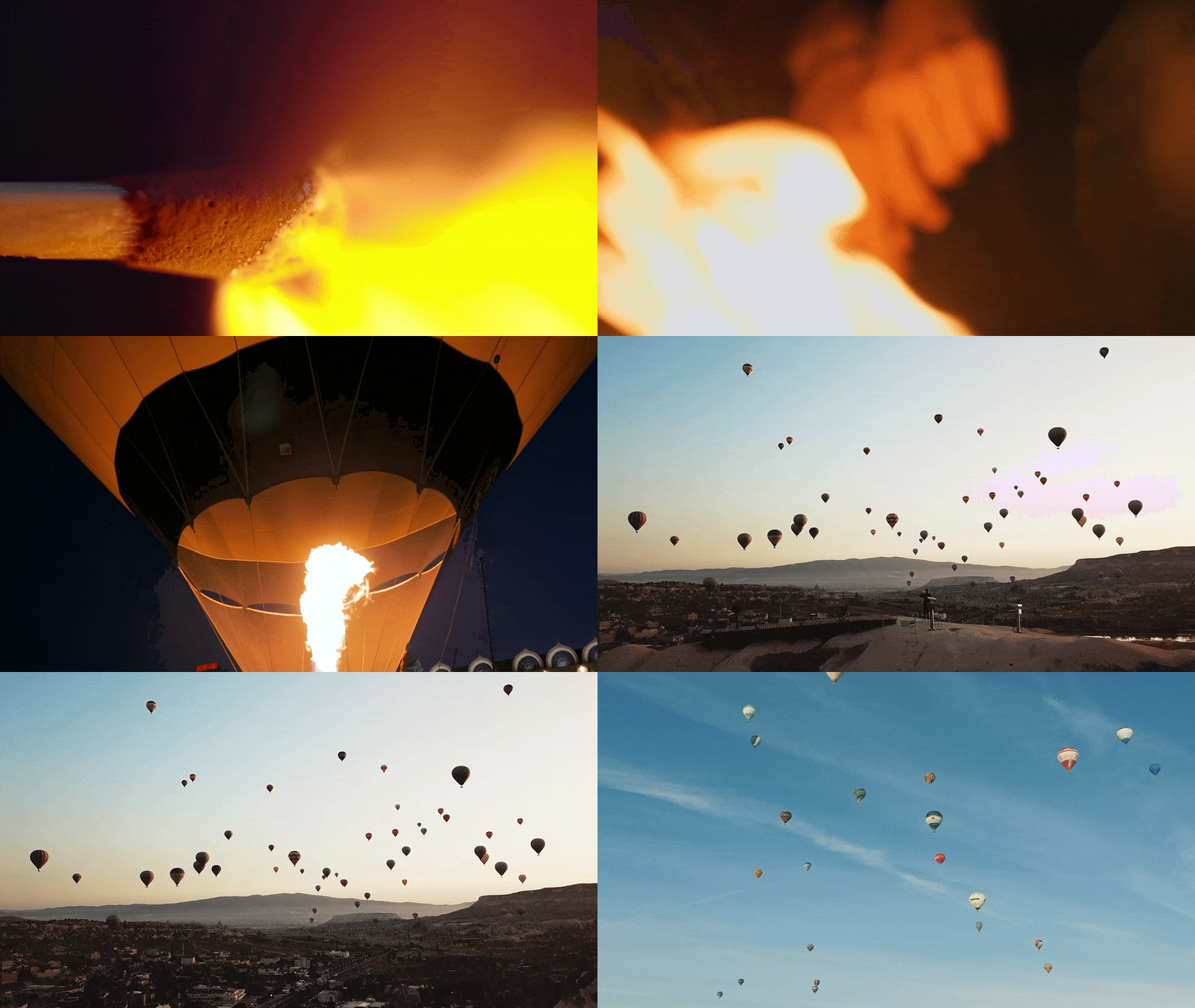
Here’s what high-performing teams will prioritize in Q1:
Before generating anything new, ask:
Most teams barely use 5% of what they capture.
Authentic AI makes the other 95% usable.
Define non-negotiables:
This protects consistency and credibility.
The future belongs to teams who can:
This is what “creative efficiency” will mean in 2026.
In 2026, the teams that win will share:
Alignment = acceleration.
This is the core question every marketer must answer:
Do you want content that feels synthetic or content that feels genuine?
Your choice shapes your brand’s identity, trust, and differentiation.
You don’t need to reject AI.
You just need to choose the right kind of AI.
One path creates synthetic, short-lived content that audiences will increasingly ignore.
The other path scales the human stories, real footage, and genuine emotion that make your brand unforgettable.
2026 draws the line.
Authentic AI will outcreate generative AI.
And the marketers who choose authenticity will win.
If your team is ready to scale real storytelling without losing the human heartbeat behind it:
Book a demo and see how Authentic AI can transform your workflow in 2026.
October 1, 2026


August 5, 2026