Digital Marketing


March 12, 2026
Estimated Read Time: 6–7 minutes
For years, paid media success came down to one belief:
Find the right audience. Push the right message. Win.
So teams invested heavily in audience construction. Custom segments. Lookalike pools. Layered targeting parameters. Endless refinement.
And it worked, until it didn't.
Privacy changes eroded signal. Third-party data became less reliable. Platforms shifted power toward their own AI systems. The manual control teams spent years building quietly became less effective.
Meta's Advantage+. Google's Performance Max. The entire trajectory of programmatic buying.
Every major platform is moving in the same direction: give us your creative, define your goal, and let the system find the audience.
This isn't a trend. It's a structural shift.
The algorithms are getting better at finding the right people than humans are at defining them. They see behavioral signals most targeting parameters can't capture. They optimize across variables no manual system could manage in real time.
Fighting this shift is a losing battle. Working with it is an advantage.
But here's what most teams miss: when you hand the wheel to AI optimization, creative becomes the primary performance variable.
If the algorithm is doing the targeting, the only thing you control is what you give it to work with.

When AI handles audience discovery, the brands that win are the ones producing the most relevant, varied creative, and producing it fast.
Not more content for volume's sake.
More versions that give the algorithm more to test, more signals to learn from, more ways to find what resonates.
This is what creative velocity means in a world of AI-driven optimization:
Every version is another input the platform can use to find its best path. More quality creative surface area means more optimization signals and stronger performance over time.
There's still a temptation to chase the single hero creative. The one perfect ad that does everything.
Understandable. Great creative is hard. Production is expensive. Approvals are slow.
But in an AI-optimized world, one asset is one data point. One data point doesn't teach the algorithm anything. It limits your surface area and your upside.
The highest-performing paid programs today aren't built around a single winning ad.
They're built around a system that produces many quality versions, quickly, from real footage that actually connects.
More creative velocity doesn't mean more synthetic content.
Not AI actors. Not fabricated scenes. Not generic scripts filling the feed.
Audiences are skeptical. Platforms are tightening policies around synthetic media. And fake content, however polished, doesn't build the trust that turns a click into a customer.
The creative velocity that moves performance is grounded in real footage:
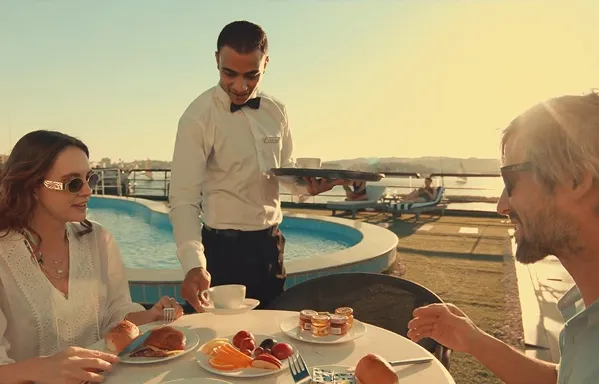
Most brands are already sitting on hundreds of hours of usable footage that never makes it to a single ad. Every buried clip is a version that never got tested, a signal the algorithm never received, a connection that never happened.
The goal isn't to manufacture more. It's to unlock what you already have and adapt it faster than the competition.
The shift from manual targeting to AI-optimized creative velocity changes where teams spend their energy.
Before: Hours building audience segments, exclusions, and targeting layers. One or two creative assets built to serve all of them.
After: Lightweight audience parameters. Many creative versions by message, hook, channel, and moment, fed into AI systems that find the right match.
The creative team becomes the performance team.
Versioning becomes the strategy.
The algorithm becomes a partner, not a puzzle to solve.
Teams stop asking "who should see this ad?" and start asking "how many ways can we tell this story well?" Then they build the workflow that makes the answer scalable.
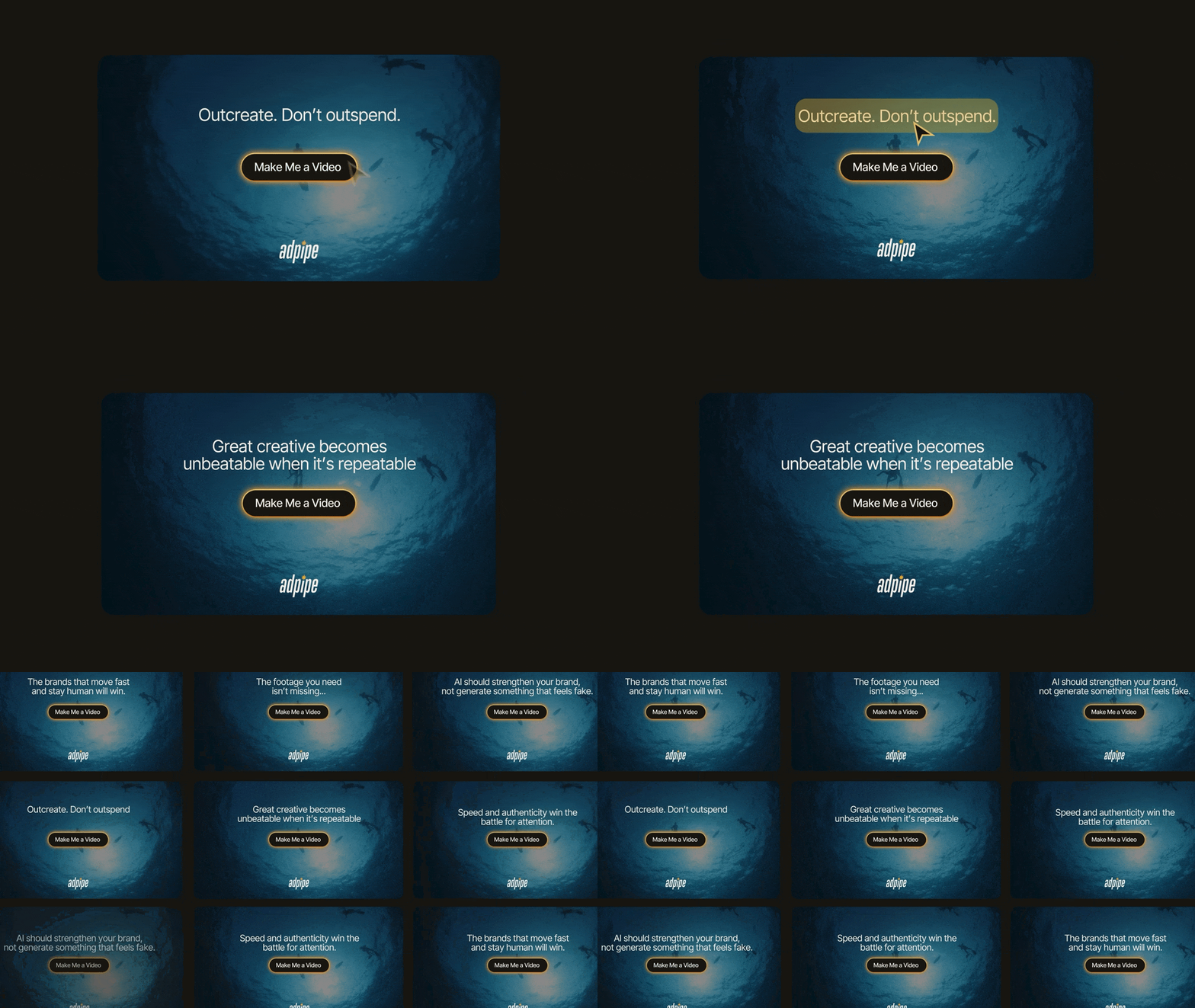
None of this works if versioning is painful.
If every new cut requires an editor, a designer, and a week of approvals, creative velocity stays theoretical. Teams fall back on manual targeting because it feels more controllable.
The unlock is a workflow built for adaptation:
When that system exists, creative velocity is operationally real. And when creative velocity is real, AI optimization has everything it needs to perform.
This is exactly where AdPipe fits in. It is the system that helps teams adapt real footage into channel-ready, brand-safe versions at speed. It removes the operational friction that keeps most teams stuck at one or two assets per campaign, and replaces it with a workflow built for the volume AI optimization actually needs to perform.
Manual audience control is losing its edge. AI-driven optimization is winning.
And in a world where the algorithm handles targeting, creative is the performance lever.
The brands pulling ahead aren't spending more.
They're creating more. More versions, more angles, more signal, built from real footage that connects and adapted at a speed traditional workflows can't match.
Stop fighting the algorithm.
Start feeding it.
Give it more of what it needs to find your best audience, in their best moment, with the story that moves them.
That's not a targeting strategy.
That's a creative velocity strategy.
And that's where performance is going.
Ready to build a creative system that feeds AI optimization?
See how leading brands use AdPipe to turn real footage into high-velocity, channel-ready video at scale.
Book a Demo
October 22, 2026


August 28, 2026