Storytelling


January 15, 2026
Estimated Read Time: 6–8 minutes

You’ve felt it before.
You scroll past ten ads without thinking, then stop on one that just feels right.
You watch a video that wasn’t flashy, but somehow sticks.
You remember a brand long after the campaign ends.
There’s no metric for that moment.
But it’s not accidental.
Some brands consistently feel more human, more relevant, more present, even when they aren’t spending more or producing more than everyone else.
That’s the creative advantage nobody is measuring.
And everyone feels it.
Marketing teams are great at measuring outcomes:
Impressions.
Click-through rates.
Conversion percentages.
Cost per acquisition.
But those metrics are lagging indicators.
They tell you what happened after someone felt something.
Long before someone clicks, converts, or buys, they subconsciously ask:
That emotional response happens instantly and invisibly.
When brands win attention consistently, it’s rarely because of one tactic or format.
It’s because their content creates a feeling of familiarity, relevance, and credibility.
That feeling is the advantage.
Modern tools make it easy to create content that looks good.
But looking good doesn’t guarantee connection.
Highly polished, generic content often fails because:
Audiences don’t disengage because the content is bad.
They disengage because it feels empty.
Powerful content doesn’t try to impress.
It tries to connect.
And connection is what creates momentum.

The brands that stand out don’t rely on novelty or spectacle.
They rely on:
A message that works on a landing page won’t land the same way in a LinkedIn feed.
A video built for awareness shouldn’t feel identical to one meant for conversion.
A prospect doesn’t need the same story as a loyal customer.
The creative advantage emerges when brands adapt real stories so they fit:
This isn’t about making more content.
It’s about making the same content feel right everywhere it shows up.
Here’s the tension many teams are facing right now.
AI makes it possible to produce more content than ever.
But used poorly, it flattens voice, removes nuance, and creates sameness.
When AI is treated as an artificial content conveyor belt, brands lose the very thing that made them distinct.
When AI is used as an authentic creative amplifier, something different happens.
It:
The advantage doesn’t disappear.
It becomes repeatable.
Here’s the uncomfortable truth:
Most teams don’t lack creativity.
They lack systems that protect it at scale.
When workflows reward:
Even great creative teams end up producing forgettable work.
But when systems are built to:
The creative advantage stops being fragile.
It becomes operational.
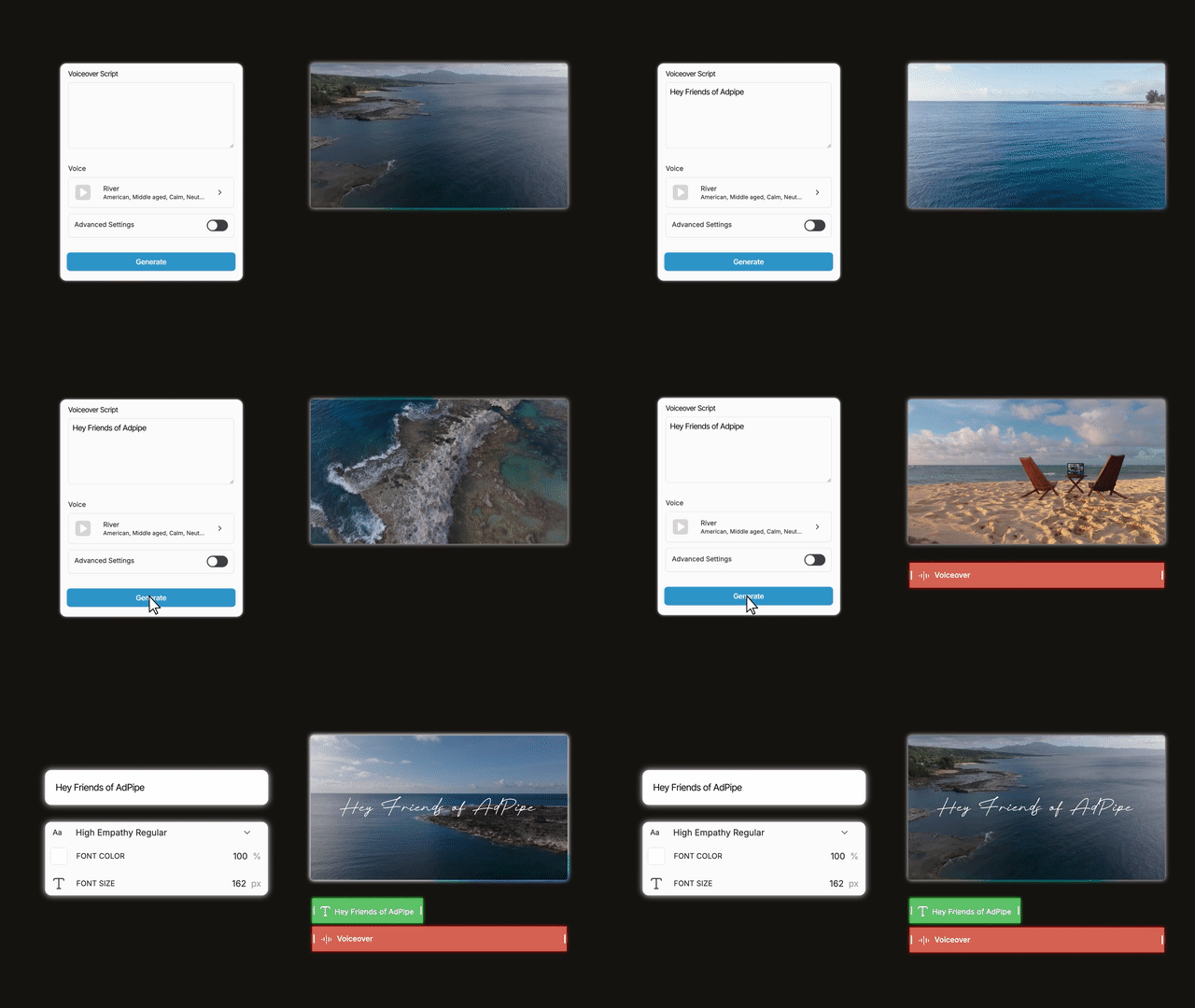
This is where modern platforms like AdPipe fit naturally, not by replacing creativity, but by giving teams a system that allows their best ideas to travel further without losing meaning.
You won’t see this advantage immediately in dashboards.
You’ll feel it first:
Over time, the numbers catch up.
Trust builds.
Conversion improves.
Loyalty compounds.
By the time competitors try to copy what you’re doing, the advantage has already moved on, because it was never about tactics. It was about how the work made people feel.
The next era of marketing won’t be won by teams who simply produce more.
It will be won by teams who understand something deeper:
That performance starts with human response, not metrics.
That authenticity creates an advantage long before it shows up in reports.
And that AI’s real power isn’t speed, it’s scale without losing soul.
The creative advantage nobody is measuring is the one audiences feel instantly.
And the brands that learn how to protect and scale that feeling will be the ones that outperform quietly, consistently, and sustainably.
Want to scale your creative advantage without flattening it?
See how teams use AdPipe to adapt real video by channel, audience, and moment, preserving what makes their work feel human while moving faster than ever.
August 26, 2026