Digital Marketing


March 5, 2026
Estimated Read Time: 6–8 minutes
Your customers don't all look alike.
They don't all buy the same way.
They don't all spend time in the same places.
And yet, most brands publish the same video. The same cut, the same message, the same framing; across every channel, every audience, every moment in the journey.
That's not strategy. That's broadcasting.
The gap between what brands publish and what audiences respond to isn't a creative quality problem. It's a relevance problem. And the fastest fix isn't a bigger budget or a better script.
It's versioning.
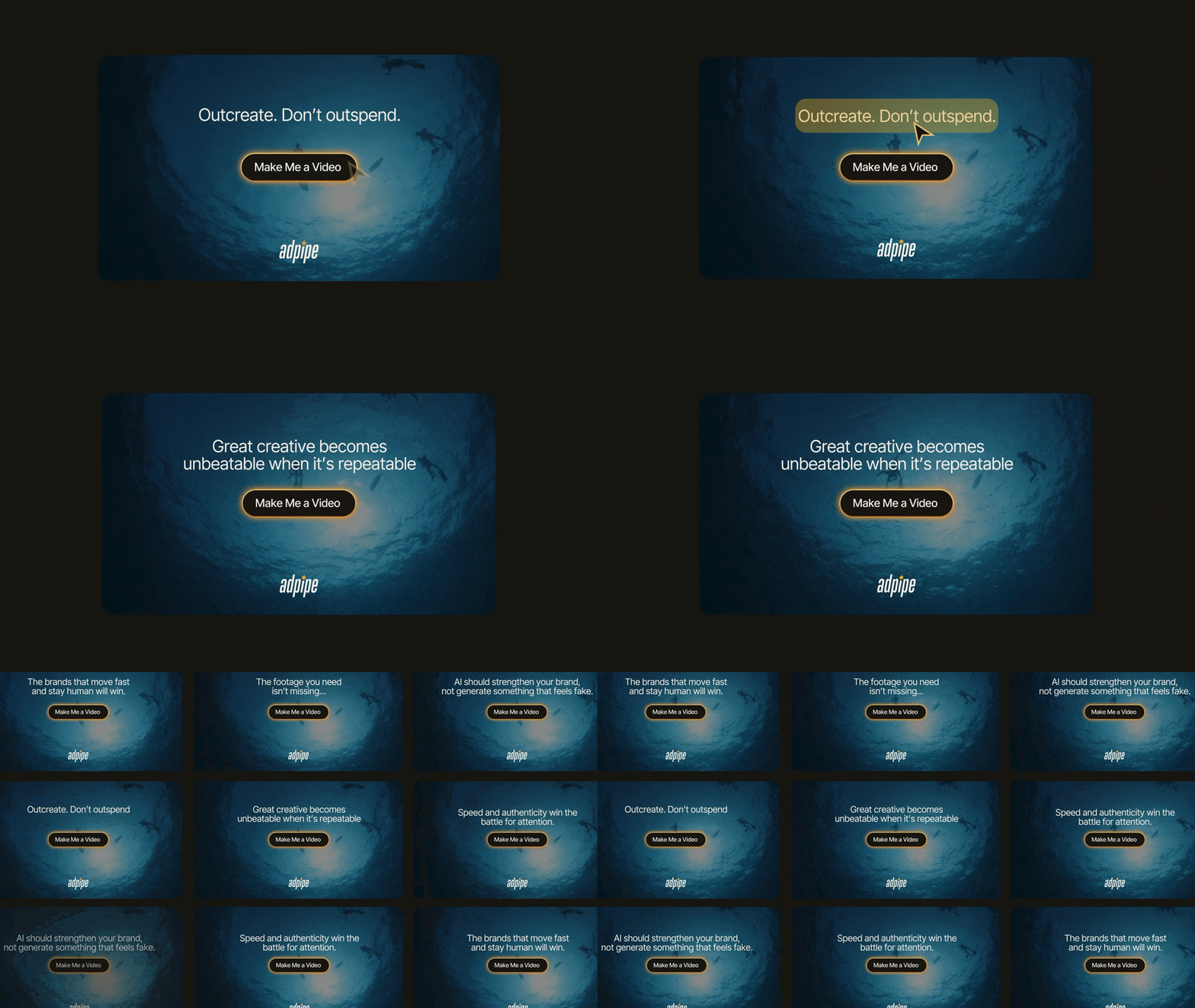
Versioning isn't simply resizing a video for Instagram.
It isn't slapping a different logo on the same asset.
It isn't repurposing for the sake of checking a box.
Real versioning is intentional adaptation. It's taking a strong core story and shaping it so it feels native to the context it lives in: the channel, the audience, the moment, the message.
Done right, versioning doesn't dilute your story. It makes it relevant
Most teams think about versioning in one dimension: format. Horizontal for YouTube, vertical for Instagram. That's a start, but it barely scratches the surface.
The brands seeing the biggest lift are thinking across four dimensions at once.
Different platforms aren't just different sizes. They're different mindsets.
A LinkedIn viewer is leaning in, open to depth. An Instagram viewer is scrolling fast, deciding in seconds. A website visitor has already raised their hand, they want clarity, not discovery.
The same story needs a different shape in each of these places:
Channel versioning isn't about making more videos. It's about making the same video feel like it belongs wherever it shows up.
A first-time prospect has different needs than a two-year customer.
A decision-maker evaluating options is asking different questions than an end-user figuring out how something works.
A buyer in manufacturing has different context than a buyer in logistics, even if the product is identical.
The story isn't wrong. The framing just needs to shift.
Audience versioning means asking: What does this specific person need to feel after watching this? Then shaping the message around that answer, without starting from scratch.
Where someone is in their relationship with your brand changes everything.
Most brands run the same awareness-stage video all the way through to conversion, and wonder why late-stage performance drops. Journey versioning fixes this by matching the message to the moment.
Some of the most powerful versioning isn't strategic, it's timely.
A product launch. A seasonal window. An industry event. These moments open and close fast. Teams that can move quickly, adapting existing footage into something relevant right now, capture attention that planned campaigns never could.
This is where speed matters most. And where AI earns its place.

Versioning isn't the destination. It's the on-ramp.
True 1:1 personalization — content that feels made for a specific individual, not just a segment — is where marketing is headed. The brands building toward it are starting with versioning.
Because versioning forces the right infrastructure into place:
When those pieces exist, moving from 1:many to 1:few to 1:1 becomes an evolution, not a reinvention.
You're not building a content machine.
You're building a relationship engine.
Versioning is how you start it.
It's not a lack of ideas. Most creative teams know they should version more. They've had the conversation. They've seen the data.
The blocker is almost always workflow.
When one version takes days, five versions feel impossible. When every adaptation needs a designer and an approval chain, the math doesn't work. So teams default to one-size-fits-all and try to make up the difference with spend.
Here's what that really costs:
The bottleneck isn't creativity. It's the workflow surrounding it.
When the system is built for versioning, the math changes completely.
One shoot becomes a library.
One library becomes dozens of versions.
Dozens of versions become more moments of relevance across every channel and audience.
Instead of asking "how do we make more content?" teams start asking "how do we make this content feel right for each person who sees it?", and actually being able to execute the answer.
This is where platforms like AdPipe change the dynamic. Not by generating synthetic content, but by making it fast and brand-safe to adapt real footage into the right version for the right moment.
AI removes the friction.
The story stays real.
Relevance becomes repeatable.
The same story told the same way everywhere is a missed opportunity.
Versioning is the bridge between the content you're already creating and the connection you're trying to build. It's the fastest performance lever most teams haven't fully pulled, and the foundation that makes true personalization possible down the road.
You don't need more content.
You need more versions of the right content, shaped for the channel, the audience, the moment, and eventually, the individual.
Start there. Build the system. Personalization follows.
Ready to see how fast your team can start versioning?
See how leading brands use AdPipe to adapt real footage into channel-ready, audience-specific video, without rebuilding creative from scratch.
Book a Demo